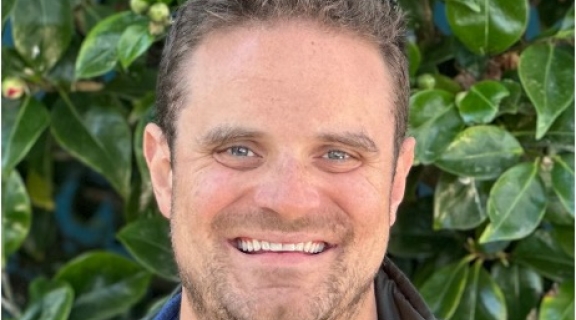
Rosenberg Institute Seminar Series - Matthew Savoca
Overview
Plastic pollution in marine food webs: Trends, pathways, and risk assessments
Matthew Savoca, Ph.D., Stanford University
As plastic production increases, understanding how plastic debris enters and flows through
marine food webs is becoming more crucial than ever before. Data from abiotic (water,
sediment) and biotic (seabirds, fish) reservoirs have confirmed exponential growth of meso-
and microplastics and fibers in marine systems over the past half century. This presentation will
focus on what is known about how marine consumers ingest plastic, how plastic moves through
the marine food web, and what strategies and techniques are emerging to evaluate the risks of
ingested plastic debris. Monterey Bay has proven an ideal location to investigate these issues
and serves as a natural comparison to the well-studied and more heavily impacted San
Francisco Bay and its adjacent marine sanctuaries. Taken together, our work can help scientists
and managers understand and mitigate this emerging pollutant in California’s waters and
beyond.
Matthew Savoca is a postdoctoral researcher at the Hopkins Marine Station of Stanford
University. Matthew completed his PhD in Ecology at the University of California, Davis, where
his research focused on why marine animals mistake plastic debris for prey items. More recently,
he has studied how microplastics flow through pelagic food webs, using Monterey Bay, California
as a model ecosystem for understanding these processes. Specifically, he studies the foraging
behavior of baleen whales, their zooplankton and forage fish prey, and their possible interactions
with microplastics. Matthew is also passionate about science communication; his popular science
writing has appeared in the San Francisco Chronicle, Scientific American, and the Washington
Post, among other outlets.