Rosenberg Institute Seminar Series - Durrell Kapan
Overview
Durrell Kapan, Senior Research Fellow, Entomology and Center for Comparative Genomics, Cal Academy
From collections to regeneration the Xerces/Silvery Blue project
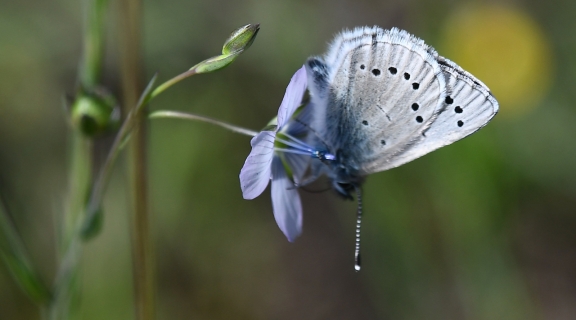
Abstract: Biodiversity is in crisis, and insects–key architects of ecosystem function–are declining rapidly. This talk tells a San Francisco story that begins with loss: the extinction of the Xerces blue butterfly, widely regarded as the first North American invertebrate driven extinct by human-caused habitat destruction. It then pivots to hope, showing how museum collections can become engines for regeneration. Using the California Academy of Sciences’ collections, ancient DNA, and ecological modeling, we asked: What was Xerces, what was its ecological “job,” and what species could serve as its avatar in restored habitats? Genomic comparisons with its closest living relative, the Silvery Blue, combined with host-plant, habitat, and climate data, pointed us to cool, foggy coastal Monterey County populations as the best surrogate. I’ll share updates from a translocation program moving these Silvery Blues to restored dunes in San Francisco’s Presidio, where partners and volunteers who help release and track butterflies have documented egg-laying, survival, and local emergence.
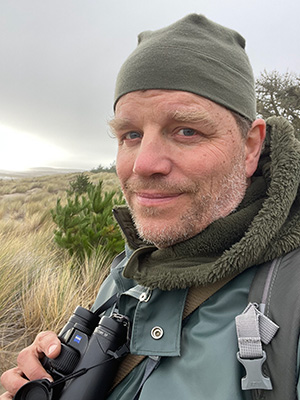
Bio: Durrell D. Kapan, Ph.D. is an evolutionary ecologist at the California Academy of Sciences Institute for Biodiversity Science and Sustainability. His research integrates insect genomics, population genetics, and data science to understand biodiversity patterns, resilience, and conservation outcomes. He works across scales—from museum collections and genomic datasets to field surveys and ecological modeling—and collaborates with partners spanning NGOs and state and federal agencies. Durrell also mentors undergraduate and graduate students and helps translate research into on-the-ground restoration and decision support for biodiversity and climate resilience.
Tags